Tag: Global Economy

  • DEBT AND FISCAL SUSTAINABILITY

    The history of the global economy is not written in gold or trade routes alone; it is written in the ledgers of debt. At its core, fiscal sustainability the ability of a government to maintain its long-term spending and debt obligations without going bankrupt is the invisible thread that connects the stability of a 19th-century empire to the volatility of a modern emerging market. When that thread snaps, the resulting chaos reshapes international relations, empowers global institutions, and creates a playground for the financial Escape Artists who profit from the wreckage.

    Historically, the relationship between a debtor and a creditor was defined by physical power. In the 1800s, sovereign debt was a matter of national honor and military might. If a country defaulted, it didn’t just face a lower credit rating; it faced an invasion. This was the era of “Gunboat Diplomacy.

    A defining moment occurred in 1902, when Venezuela defaulted on its European debts. In response, Britain, Germany, and Italy launched a naval blockade, sinking Venezuelan ships and shelling coastal fortifications. This event was so pivotal that it led to the Drago Doctrine, a precursor to modern international law, which argued that no foreign power should use force against an American nation to collect a public debt.

    As the 20th century progressed, the enforcement of debt moved from the battlefield to the boardroom. After World War II, the Bretton Woods Conference established the International Monetary Fund (IMF). The goal was to replace naval blockades with a “Lender of Last Resort.” However, this shift didn’t eliminate the power imbalance it simply changed the currency of influence. Debt became a tool of geopolitical alignment, used during the Cold War to keep developing nations within the orbit of either the United States or the Soviet Union.

    Today, fiscal sustainability is managed by a complex web of international organizations that act as the “financial police.” The IMF and the World Bank are the primary actors, but their role is often controversial. When a country faces a debt crisis, the IMF provides the liquidity needed to prevent a total collapse. In exchange, they demand “Conditionality”—structural adjustment programs that require the country to cut public spending, privatize state industries, and raise taxes.

    While these measures are designed to restore fiscal health, they often have a devastating human cost. In international relations, this creates a “sovereignty gap.” When a government must choose between feeding its citizens and paying back foreign bondholders to satisfy IMF requirements, it often leads to political instability. We see this cycle repeating today in nations like Argentina, which has defaulted nine times in its history, and Sri Lanka, where debt-fueled inflation led to a popular uprising in 2022.

    Furthermore, the rise of the G20 Common Framework reflects a shift in the global hierarchy. For decades, the Paris Club (mostly Western creditors) dictated terms. Now, with China becoming the world’s largest bilateral creditor, debt negotiations have become a proxy for the broader struggle for global hegemony.

    In the 21st century, debt has become a primary instrument of international relations. The concept of “Debt-Trap Diplomacy” has dominated discussions regarding China’s Belt and Road Initiative (BRI). By lending billions for massive infrastructure projects in developing nations ports in Sri Lanka, railways in Kenya, mines in Zambia—critics argue that creditors can gain strategic leverage over a country’s physical territory and foreign policy.

    Whether intentional or not, these debt burdens redefine the concept of sustainability. A nation is only fiscally sustainable if it can grow faster than its interest rates. When high-interest debt is funneled into projects that don’t generate immediate revenue, the country becomes trapped in a “repayment loop,” effectively surrendering its economic autonomy to its creditors.

    Within this system, a specialized group of actors has mastered the art of “escaping” the traditional rules of finance. These “Escape Artists” operate in the shadows of international law, often making the path to fiscal sustainability impossible for struggling nations.

    1.Vulture Funds: These are private hedge funds that specialize in “distressed debt.” When a country like Argentina or Greece is on the verge of default, these funds buy up the country’s bonds for pennies on the dollar. While other creditors might agree to a “haircut” (accepting less than they are owed to help the country recover), vulture funds refuse. They use aggressive litigation in New York or London courts to sue for the full face value, plus interest. They are the ultimate escape artists, bypassing the collective spirit of international restructuring to extract massive profits from bankrupt states.

    2.The Great Capital Flight: Fiscal sustainability is destroyed when the tax base disappears. In many high-debt nations, the political and business elites are the first to “escape.” Using tax havens and offshore shells, they move their wealth out of the country before a currency devaluation hits. This leaves the domestic middle class and the poor to shoulder the entire burden of the national debt.

    3.Inflation as an Escape Hatch: Sometimes, it is the government itself that acts as the escape artist. Through financial repression, a government can keep interest rates lower than the rate of inflation. This allows them to pay back their debt in “cheaper” currency. While this makes the debt look more sustainable on paper, it effectively acts as a hidden tax on everyone who holds the national currency, wiping out the savings of the populace.

    The link between debt, history, and international relations reveals a stark reality: fiscal sustainability is rarely just a technical accounting problem. It is a struggle for power. History shows that when debt becomes unsustainable, the resulting “fix” usually involves a transfer of wealth or sovereignty.

    Today, the global economy stands at a crossroads. As interest rates remain high and geopolitical tensions rise, the world’s poorest nations are spending more on debt service than on health and education combined. To break this cycle, the international community must address the “Escape Artists” who profit from dysfunction and create a system where sustainability is measured not just by a debt-to-GDP ratio, but by the stability and well-being of the people within those borders.
  • Observation: The smooth Hawley tariff in real time

    The Smoot Hawley boomerang in real time the US average tariffs have officially hit a 90 year high this week mirroring the 1930 collapse. While international bodies remain powerless, the neutral hubs we Identified Vietnam, Mexico and Poland are no longer just alternatives they are the new multilocalized fortresses. This isn’t a trade stop, it’s a filter to force Chinese EVs makers into deeper localization. The Smoot -Hawley Boomerang is returning but neutral hub strategy remains the only exist

  • THE GLOBAL ECONOMY ON LIFE SUPPORT 

         The global economy is no longer recovering. It is undergoing a radical painful mutation. To understand the headlines of 2026, we must stop looking at market fluctuations as a weather and start looking at them as symptoms.

       Here is the diagnostic report on two greatest threats facing the world today.

    The second China shock: Is the global trade dying or being murdered?

      In January 2026,we are witnessing a phenomenon economists call the the second China shock.unlike the first shock in the early 2000s which focused on low end textiles and toys,this version is high tech China has pivoted it’s massive industrial capacity towards electronic vehicles (EVs) lithium batteries,and green energy infrastructure. Because Chinese domestic consumption remains low, the exporting their deflation, flooding western markets with goods priced so low that industries cannot possibly compete.


    (more…)
  • THE GOLD ESCAPE

         In the opening months of 2026, the seismic recalibration of the global financial architecture has moved from a theory to reality. For the first time since the post cold war era, the collective actions of the world’s central banks suggest a consensus that transcends traditional market forecasting. We are witnessing a structured migration from digital, dollar- dominated debt towards physical gold a movement signaling that the foundational trust required to maintain globalized,rules based order is evaporating. To a trader,this is a bull market. To those tasked with navigating the long term survival of the state this is a systematic signal. It indicates that the peace through trade era is being replaced by a much older,more guarded reality.

    (more…)
  • WHY SOVEREIGN AI IS THE END OF GLOBAL COOPERATION

        In 1648, the treaty of Westphalia ended thirty years of religious slaughter by establishing a simple brute rule cuis regio, eius religio(whose realm,his religion). It is birthed modern nation state by granting monarchs total authority over their territory. For 400 years, we believed the realm was defined by physical soil,borders and flags.

    By 2024, the world has drifted

    Into a borderless illusion we believed that data capital and code were stateless. But as we enter 2026, the nation state is striking back with vengeance. Sovereign Ai is the new Westphalia. The shock for the global CEO is this. The era of global tech stack is dead. If your company relies on centralized Ai cloud hosted in a foreign jurisdiction, you are no longer a private entity, you are a digital vassal of the state that controls that infrastructure.You are currently operating on borrowed sovereignty and in 2026, the leaders are calling in debt.

        In the 17th century, the Dutch jurist Hugo Grotius argued for Mare liberum(the free sea) it was a revolutionary idea that allowed the rise of global trade.But as soon as empires realized that sea was the primary source of wealth and power,the turned into Mare clausum( the closed sea). This led to centuries of privateering naval blockades and the rise of chartered companies that were essentially arms of state .

    (more…)
  • BRICS VS THE DOLLAR

    PROGRAMMING THE 2026 DOLLAR

      As we enter February 2026, the global financial landscape is witnessing a pivot that feels like a technological upgrade and more like a geopolitical divorce. For the last century, money was a dumb tool – a neutral medium of exchange that existed between parties but as for 2026, the very nature if value is being programmed as a tool of states craft.

        The most visible front of this war is bifurcation of money. On one side, the united states has officially pivoted toward a private-sector- led model with the enactment of the GENIUS ACT guiding and establishing national innovation for the U.S stable coins, In July 2025 this law has effectively empowered commercial banks and authorized non-bank issuers to create a digital “dollar” through regulated stable coins, positioning the U.S as the global crypto capital that avoids state-run Central Bank Digital Currency (CBDC).

        On the other side of this new “digital iron curtain” a different version of sovereignty is taking hold. According to Atlantic council’s CBDC Tracker 137 countries, representing 98% of global GDP are now actively exploring or piloting CBDCs, leading this charge is India which assumed BRICS presidency in January 2026 and has already proposed a unified digital payment system for the bloc that would allow member nations to by pass the U.S dollar and SWIFT network entirely we are no longer talking about moving money. In the current 2026 environment money has become a “programmable power”.

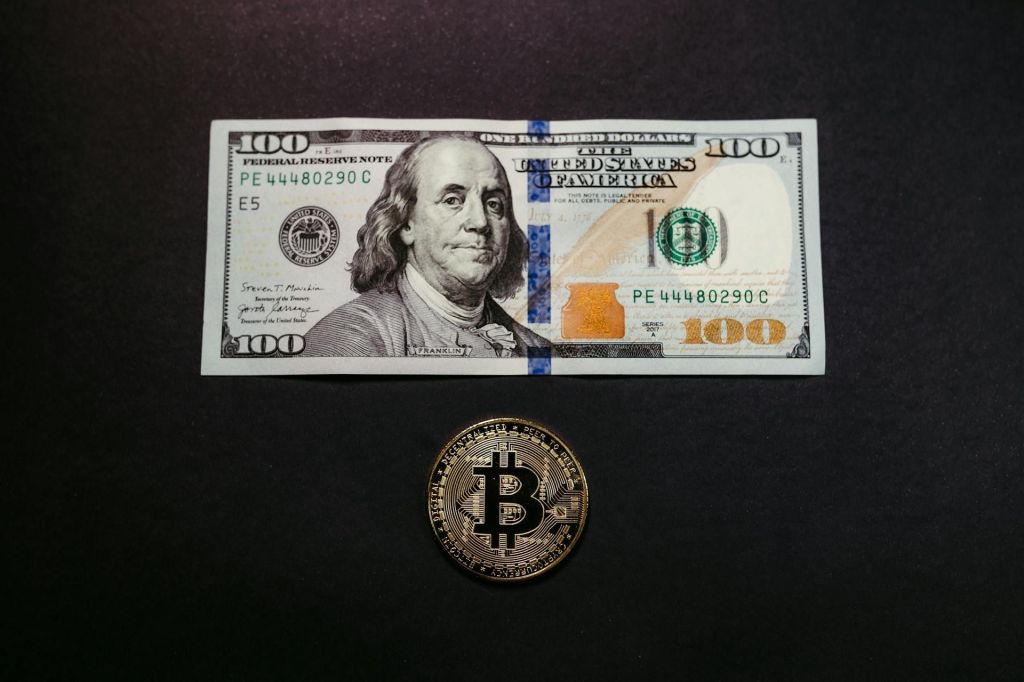
       The BRICS strategy; the proposed BRICS bridge aims to interconnect national CBDCs to facilitate direct settlement in local currencies. This isn’t just about efficiency it’s a defensive measure against western sanctions. The U.S response rather than building a state coun the U.S has established a strategic Bitcoin reserve. By treating Bitcoin as a digital gold,” Washington is attempting to anchor it’s digital economy to a decentralized scarce asset while allowing private market to handle the programmable stable coin side.

        The divergence represents a fundamental question for international relations in 2026 will the future of money be open source network of private innovations, or a closed-looped system of government surveillance? As we see in the next section, this debate is not new it is a clear digital echo of the exact same crisis that toppled the Roman Empire’s monetary system 1800 years ago.

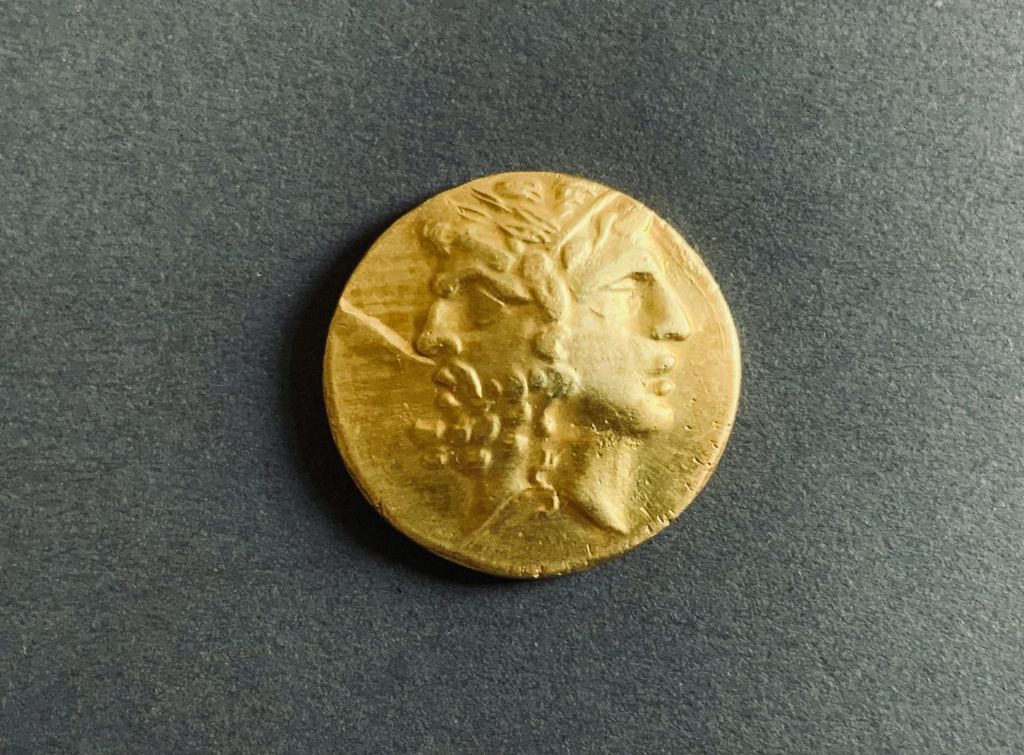
        To understand why the shift to programmable CBDCs in 2026 is so significant, we must look at the 3rd century collapse of the Roman denarius. This is the original master class in how a super power destroys its own sovereignty by manipulating it’s own medium exchange. In the early days of the empire, the denarius was a pillar of stability 98% pure silver.However by reign Marcus Aurelius (161-180 C.E), the silver content had dropped to 75%. By the time of the crisis of the the third century under Emperor Gallienus, the silver coin was little more than a copper core with a thin silver wash that wore off in weeks.

    (more…)